LA TAILLERIE
CORAL
THE ART OF JEWELLERY IN ALL ITS FORMS
For several generations, the Robbez Masson family has been the embodiment of jewellery-making expertise handed down with passion and rigour. From the family back shop in rue Jean Jaurès to the Taillerie du Corail, the history of this porto-vecchi institution is that of a living heritage, shaped by a love of jewellery, coral and a job well done.
Jewellery has the power to be that little thing that can make you feel unique
Elizabeth Taylor
A family home
The family history of Bijouterie Joaillerie Marc Robbez Masson goes back far beyond the founding of the Taillerie du Corail and extends far beyond the island's borders.
At the beginning of the 20th century, we meet Eugénie and Joseph Burderon, lapidaries by trade, who are none other than Marc's great-grandparents. Later, his grandparents, Juliette and Luc Robbez Masson, farmers by trade, became lapidaries in the summer to support their family in difficult times.
Marc's father, Marcel Robbez Masson, continued the family tradition as a diamond lapidary, but later turned to jewellery making. With his wife Gisèle, he opened his own jewellery store in Mende, in the south of France. Marcel Robbez Masson soon became a leading name in its field.
This is the world in which Marc grew up. Although he has a real passion for gastronomy, and is an avid viewer of Top Chef, his heart leans towards jewellery design.
At just 16, he walked through the doors of the prestigious «Ecole de Joaillerie», 58 rue du Louvre, now the Haute Ecole de Joaillerie. This renowned, centuries-old establishment teaches both the age-old skills and the latest technologies of the trade. In fact, a few decades later, his collaborator, Anne, would also begin her career there.
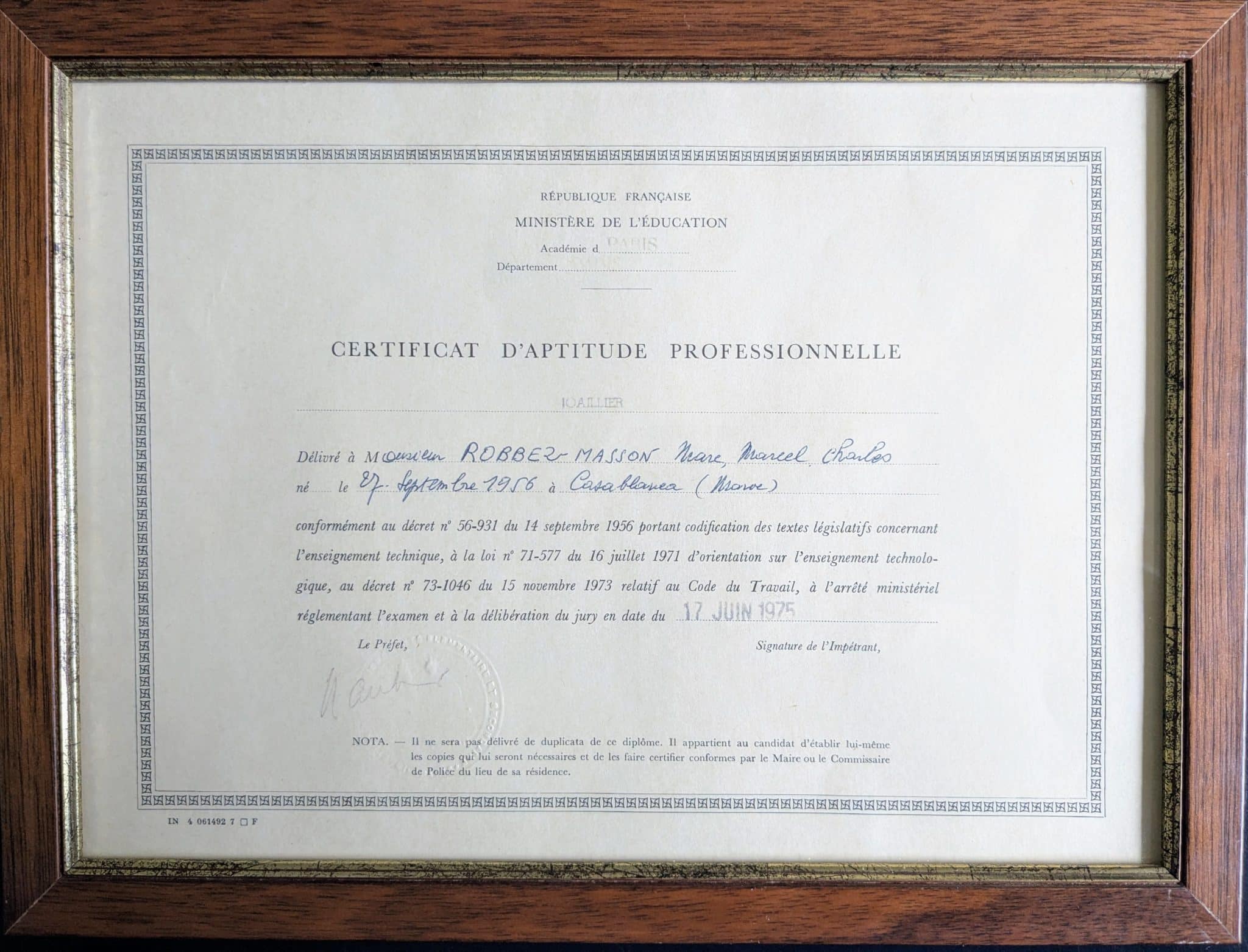
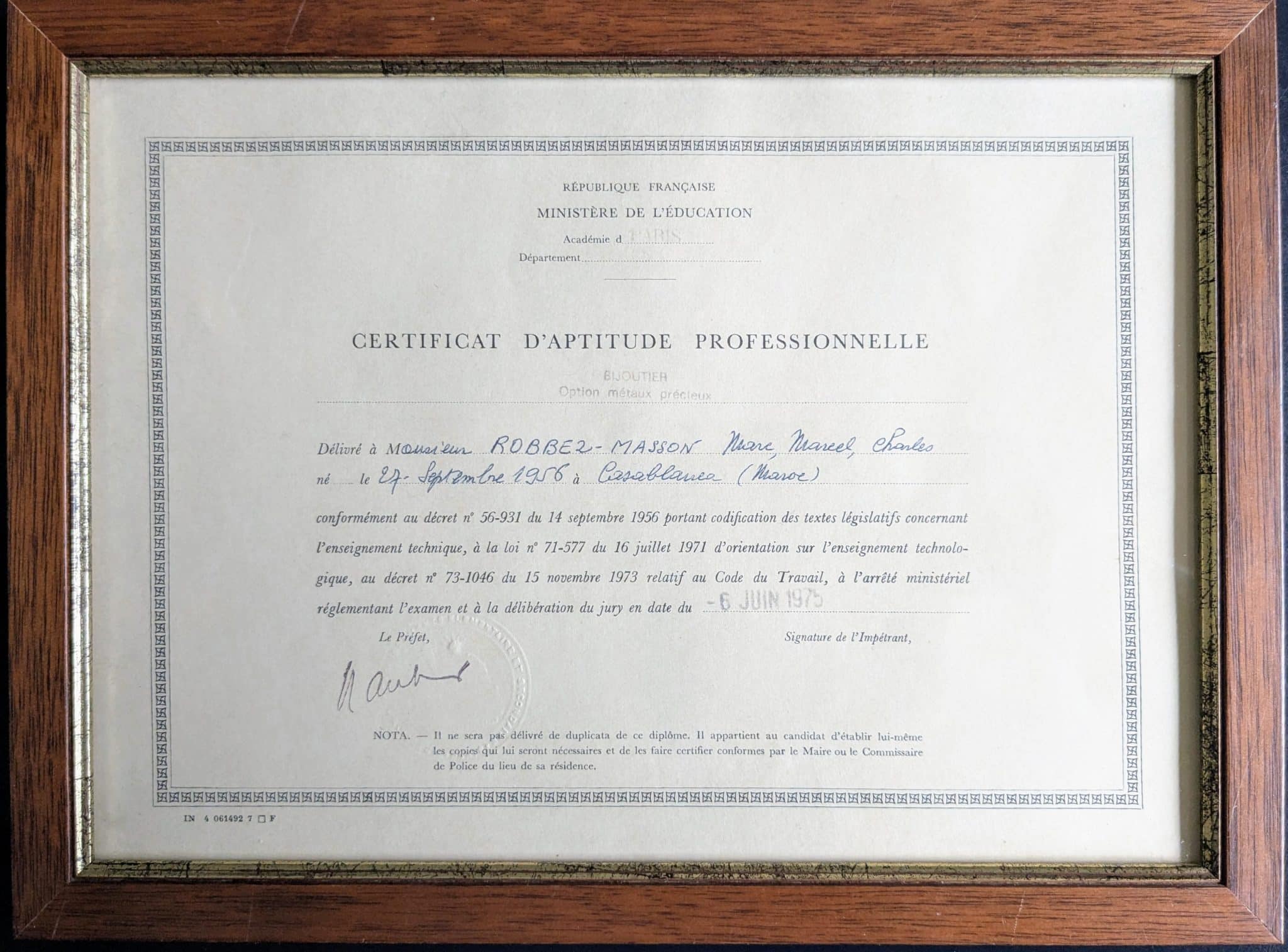
The young man obtained his CAP after a year of jewellery-making, followed by a year of jewellery-making and a third year as an apprentice at a major jeweller: the Blondeau workshop. Not an insignificant craftsman, because at the time it was one of the workshops making jewellery for Cartier and Van Cleef...
At the same time, Marc's father regularly travels to Corsica. He works with the island's jewellers, with a collection dedicated to them in coral, gold and silver. During a trip to Portivechju, a chance meeting inspired the idea of buying a business in the town, which was destined to become a renowned tourist resort. Marcel Robbez Masson realised the future potential of Portivechju and decided to open a jewellery store there for his daughter.
In 1974, Maison Robbez Masson Porto-Vecchio opened its doors at 5 rue Jean Jaurès, where Marc spent his first summer season.
Sur Un air d'antan
With his diploma in hand, Marc was confronted head-on with the consequences of the 1973 oil crisis. The major jewellery houses were experiencing an unprecedented crisis. When he returned to Paris at the end of the summer of 1975, after his second season at the Portivechju jeweller's, professional opportunities were scarce. But the young man wasn't sorry. In fact, he didn't even feel like a city boy. How can you appreciate the dullness of Paris once you've experienced the sunshine of the Mediterranean?
So when, that same year, his sister decided to leave the Portivechju jewellers, Marc, aged just 19, saw his opportunity! He asked his father to take over the jewellery business.
In this Jean Jaurès neighbourhood, he found the «village life» atmosphere that so attracted him. The Mallaroni, Papi and Simoni bakeries, the Cesari tobacconist, the Tafani de Caraba butchers, the town's only photographer, the Picciocchi dry cleaners, the Deldique - Margheriti analysis laboratory, Culioli grocery shop, BP garage, Mr Sauer's Holzer establishment, Ettori travel agency, Hertz agency, then above, the Mistral bar and hotel, as well as Mr Bessière's Panorama hotel, then deputy mayor. Even though Mr Biancarelli's cinema had already closed, this was the lively district par excellence, and the jewellers naturally found their place there.
The shop housed the jeweller's workshop and that of the watchmaker, Mr Jean Peinado, who came to Portivechju at the request of the Robbez Masson family, initiating the first watch repairs in the town.
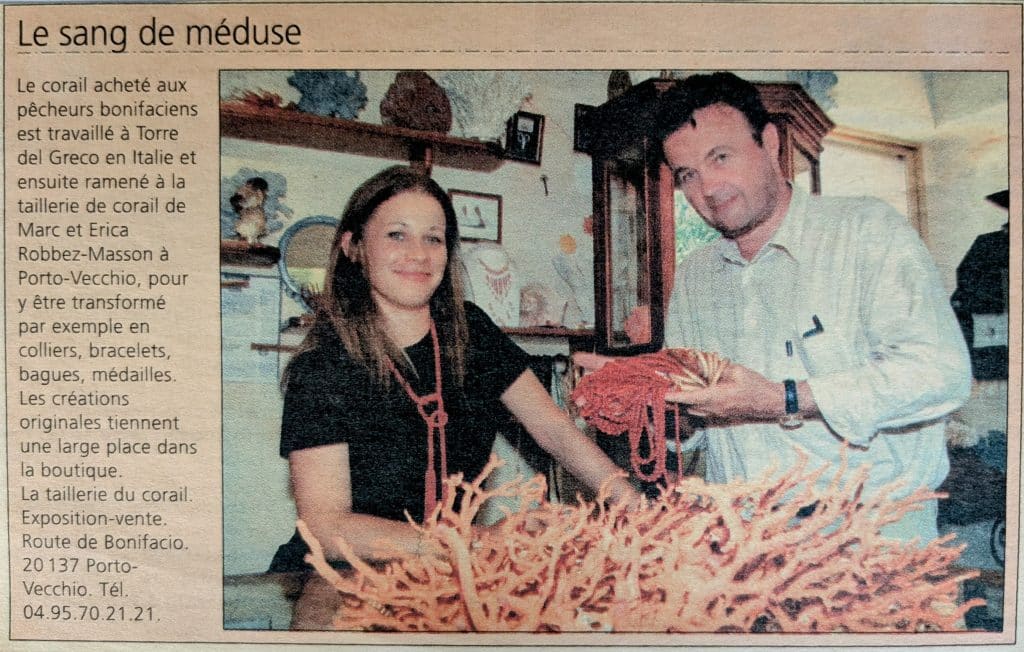
The coral sold in the shop, although of Corsican origin, is cut in Italy. So it wasn't long before the desire arose to work the coral locally and create the first coral cutting factory in Corsica.
Respect for Coral
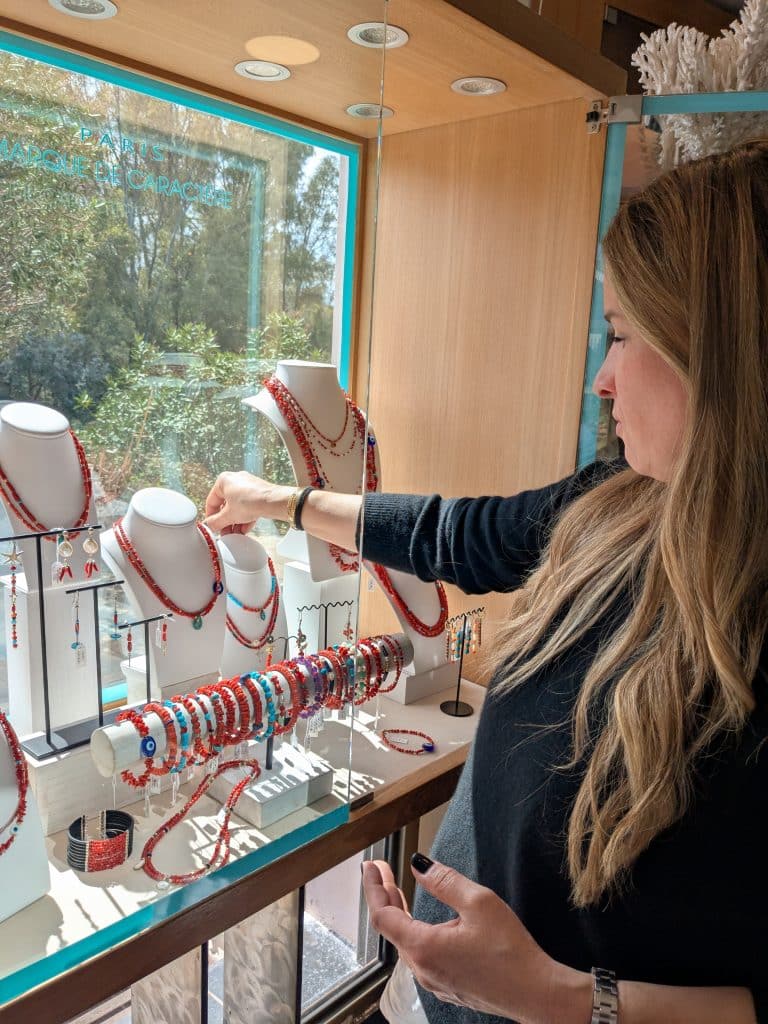
The winter of 1980 saw the birth, at 46 rue Maréchal Juin, of the Taillerie du Corail. This cutting workshop was joined by the town's jewellery and watchmaking workshops. The jeweller's shop on rue Jean Jaurès was then devoted to sales, before closing its doors in 2000..
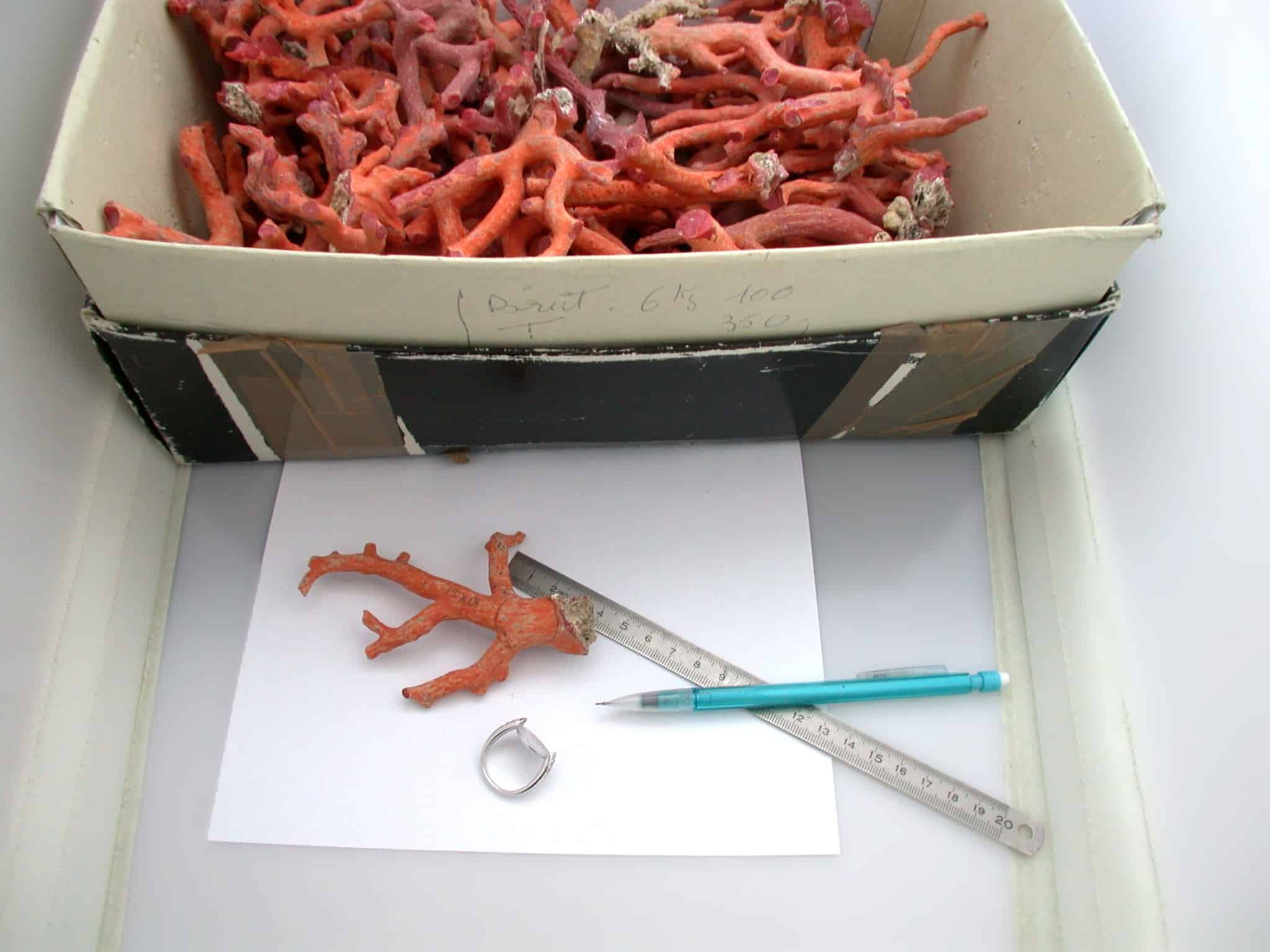
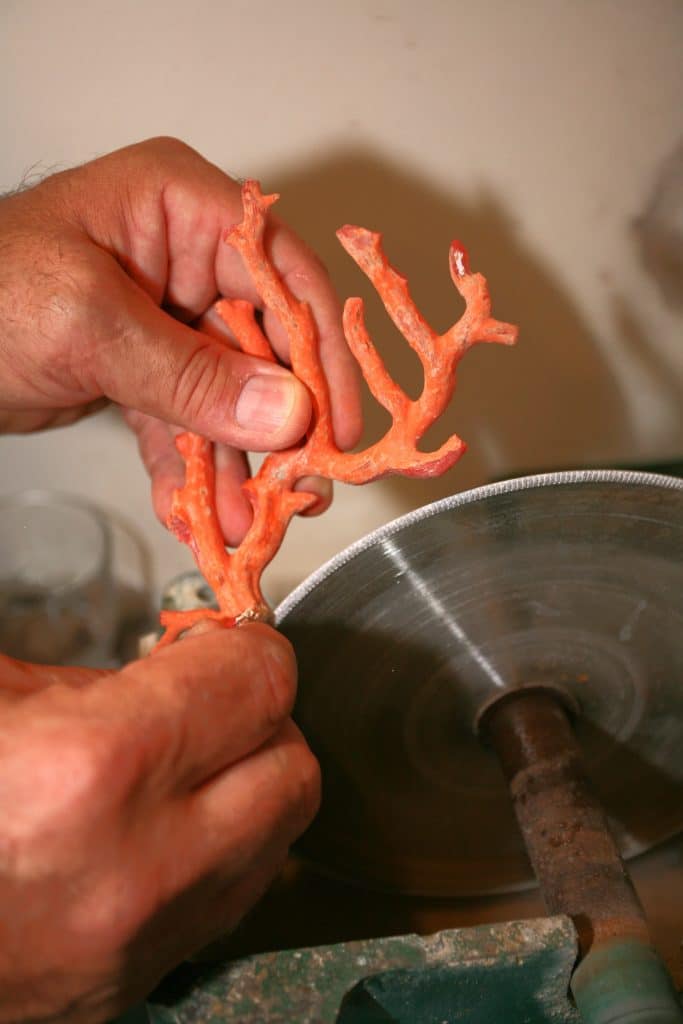
Working with coral is very different from her father's and grandparents« trade: The gems, precious and semi-precious stones, are cut and polished into facets or cabochons. Like amber or mother-of-pearl, the work is different, simply because coral is not a mineral but a living organism. The material is harder, and Marc Robbez-Masson emphasises this nuance by speaking of a »coral cutter« rather than a »lapidary".
Mediterranean coral covers the seabed between Marseille and Nice, in Sardinia, Croatia and North Africa. It comes in a range of red colours, more or less intense depending on the region. It is also found in oceans such as the Atlantic and Pacific, and has been since the dawn of time, with Japanese coral varying between different shades of white and pink. There was even a time when it was red, but this has now all but disappeared.
However, the coral that is cut in the workshop is insular. And yet, these days, it's very difficult to get hold of local coral. The Taillerie works mainly with its stock, which is several years old and is made up of fish caught by former Bonifacian coral cutters who are no longer working.
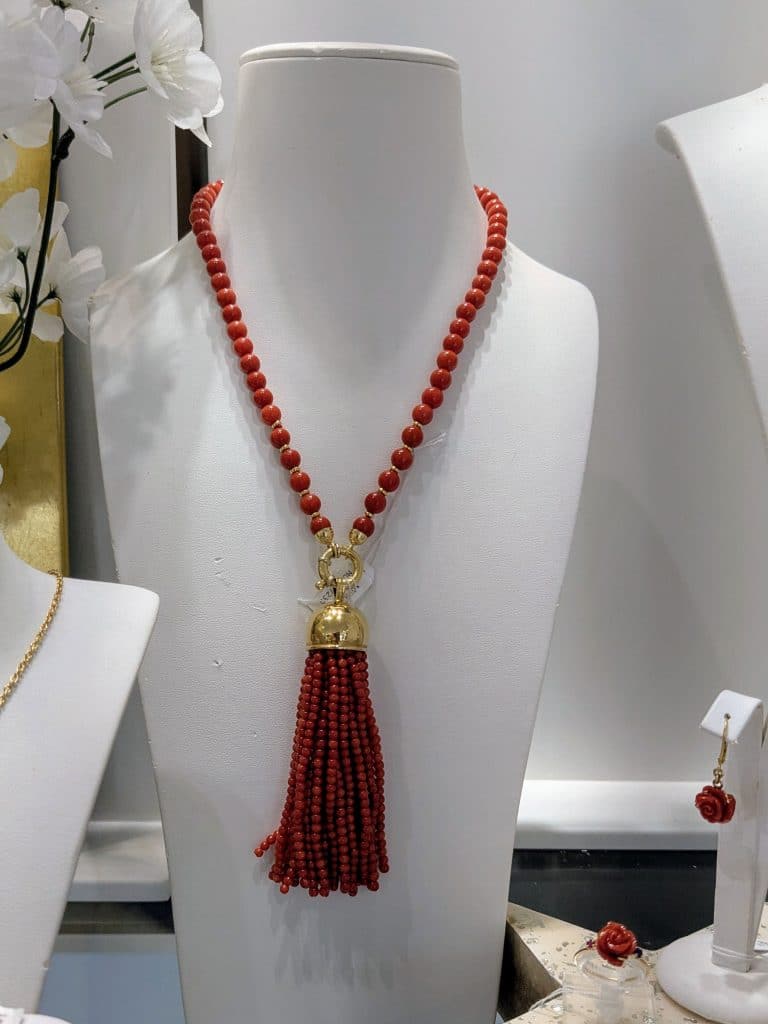
In order to save its reserves, the cutter sometimes takes the opportunity to buy a few kilos here and there. It can also source pre-cut coral, such as pearls, tubes and points, from artisans in the «coral capital» of Torre del Greco, perpetuating a collaboration that goes back more than forty years.
The rarity of the island's coral does not mean that it is endangered: regulations are in place to protect it by banning crosshooking and introducing selective fishing. But the coral that lines the seabed is, for the most part, simply too young to be harvested and exploited. We still have a few decades to wait before it is the right size. And the profession of coral cutter, because it is so difficult and dangerous, is tending to become rarer or even disappear...
The Resistance of know-how
The inspiration for a piece of jewellery comes from a combination of ideas: it is rooted in the tastes and colours of the moment, in fashion trends, in the shapes of other designers... Inspiration that is also confronted with an economic reality: the weight of the gold and the size of the coral have to be «thought through» to remain affordable.
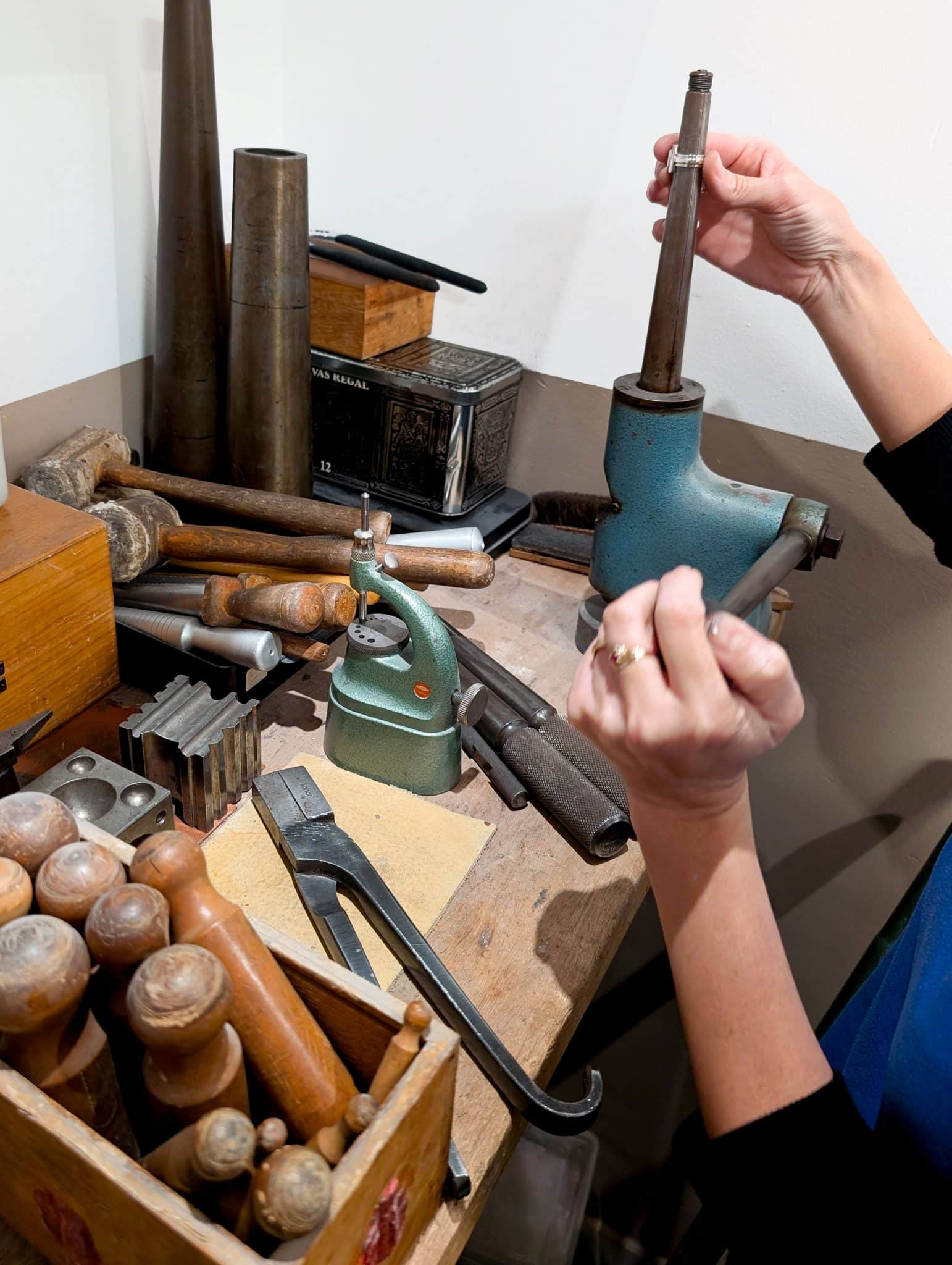
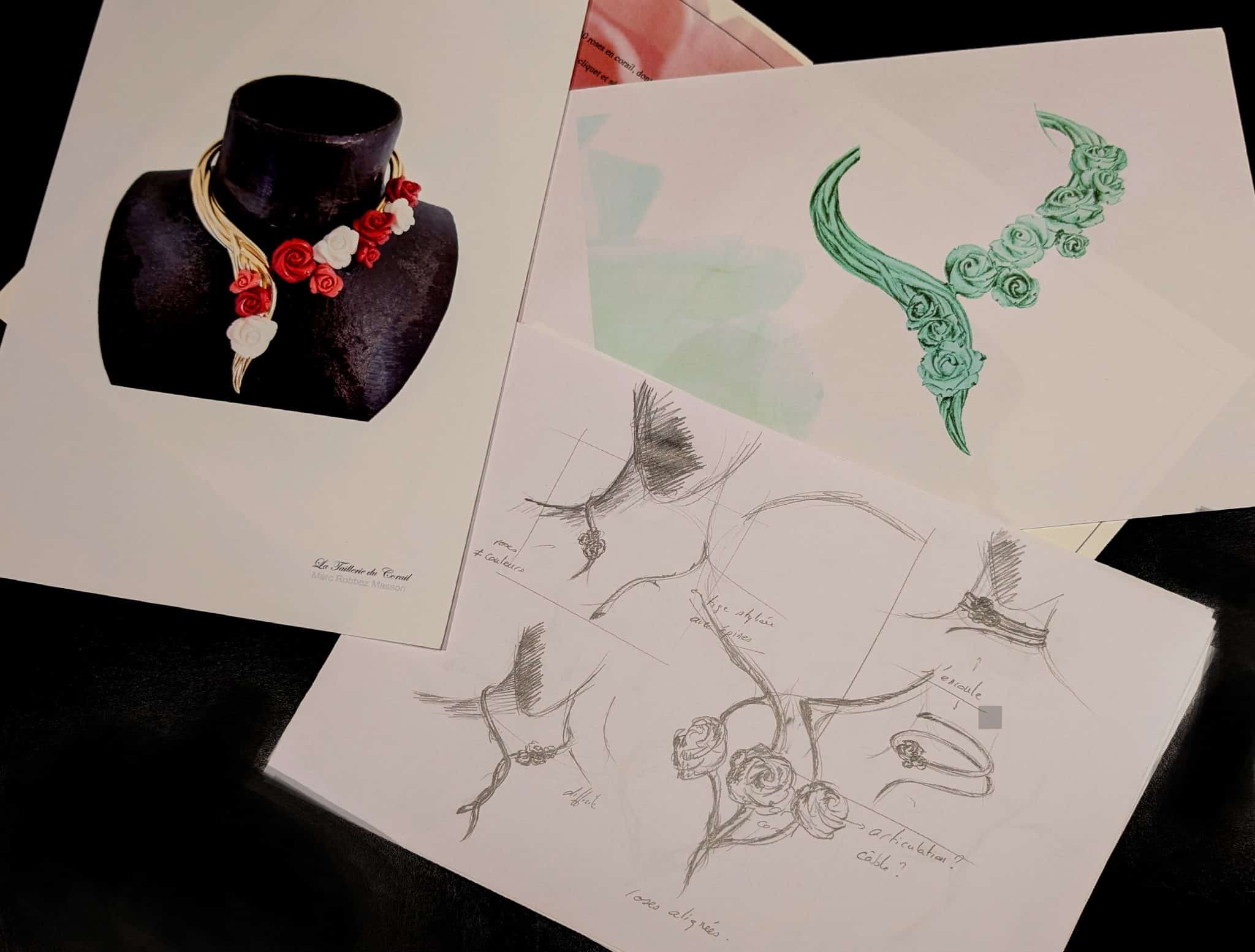
The ideas take on their first dimension on a sketch. Then comes the discussion about the feasibility of the piece, the cost involved and the team's approval. The model is then cast in wax. The craftsmen then take over, such as the foundryman who casts the gold or metal from the model and the gem-setter who anchors the stones in the jewel.
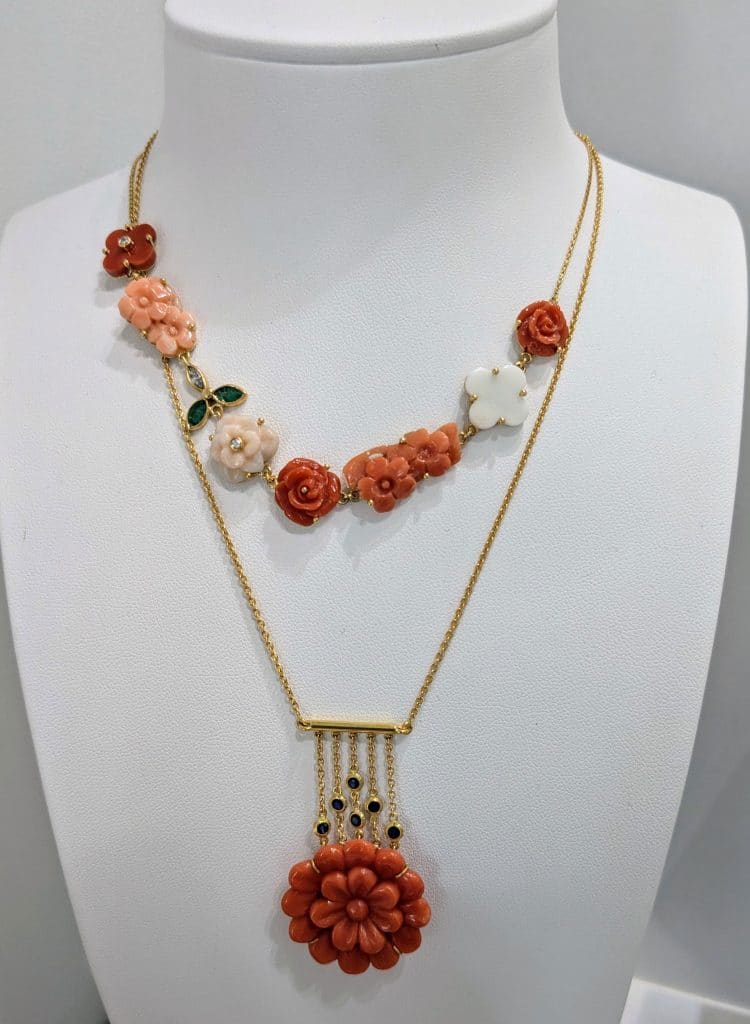
This has given rise to exceptional pieces such as the Stories of roses with its necklace in 18-carat gold intertwined with roses of red and pink coral from Corsica and white coral from Japan, accompanied by a ring and earrings of the same essence. For this vertiginous piece, the art foundryman from Marc's training school was called in, in a nod to the jeweller's origins. The collection A la folie also illustrates this expertise: 18-carat white or yellow gold rings adorned with red coral petals from Corsica, diamond-paved petals or pink or white coral petals from Japan.
The fantasy collections are not to be outdone and are guided by the inspirations and desires of the moment, such as the Cistus flowers, created in 2023, a tribute to the local natural heritage...
Fancy or mass-produced, the creations remain handcrafted: mounting cables, spinning pearls, fitting silver clasps - every gesture testifies to the expertise of the House.
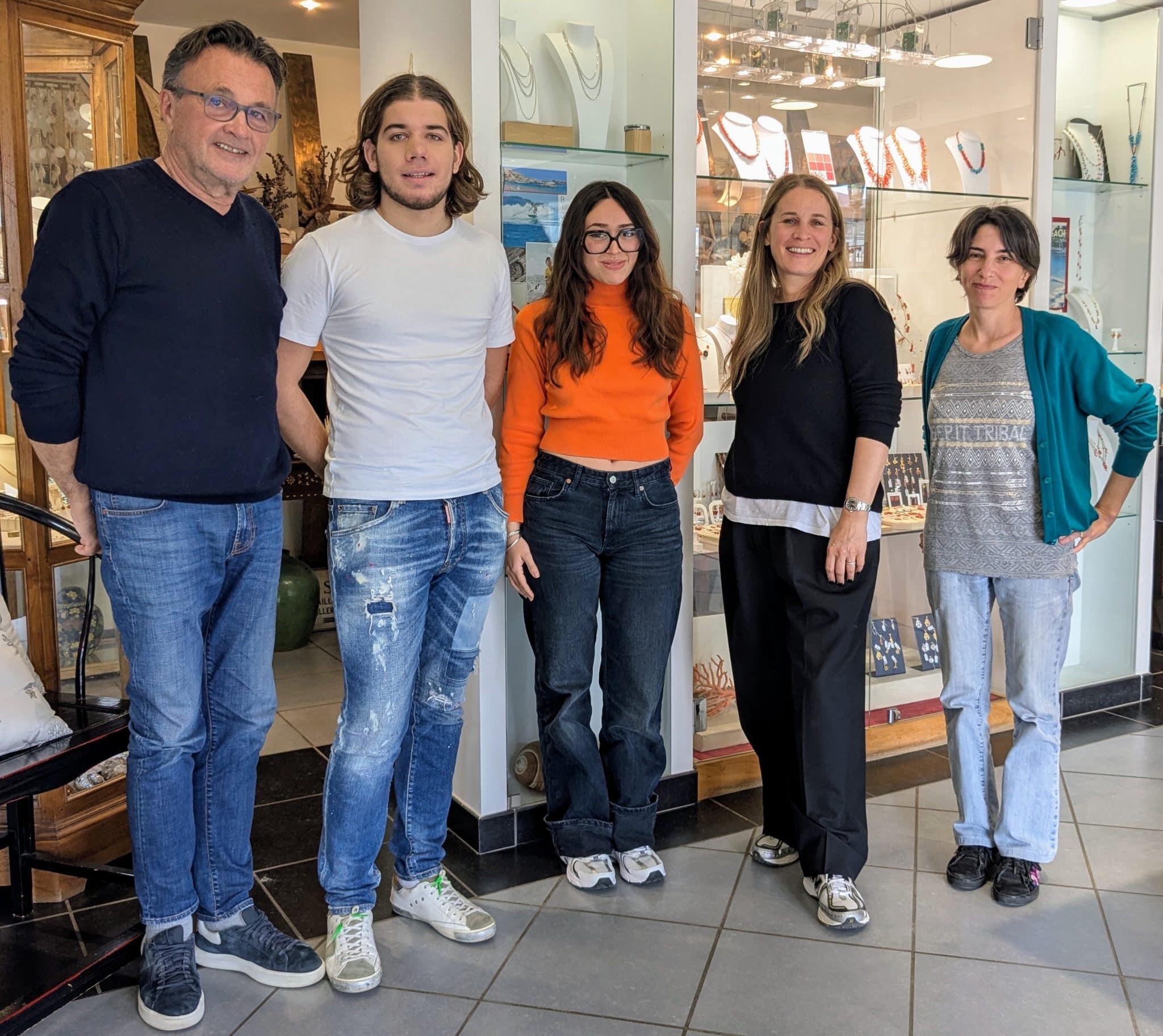
This passion and these values were passed on to his daughter Erica, who joined the adventure in 1999, bringing a fresh outlook and a touch of modernity. Marc Robbez Masson is confident that the next generation will be there, and is considering handing over the reins. But then his grandson, Matteo, expressed his desire to get involved in the Taillerie du Corail. Marc put off his departure to pass on his experience to Matteo.
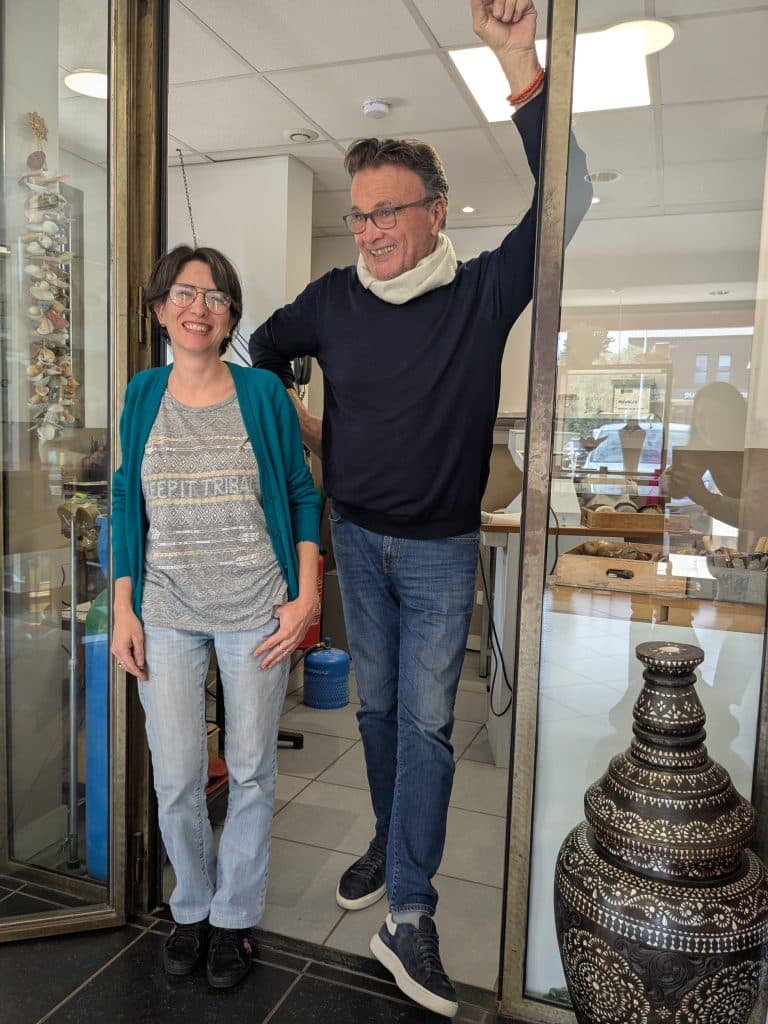
A fervent advocate of craftsmanship, Marc wants to instil rigour in his work: the importance of taking the time to do things right, of seeing the work through to the «perfect» finish, and of using real materials, real stones, etc. What he also wants to leave behind him is respect for the jewel: the weight of the gold, the caratage of the stones, etc. All these criteria are often neglected, but represent the essence of his work. What he also wants to leave behind him is respect for the jewel: the weight of the gold, the caratage of the stones, etc. So many criteria that are often neglected, but which represent the very essence of a jewel...
Nostalgic for a know-how that is being lost, Marc Robbez Masson hopes to pass on this heritage, or at least give the keys to it to the generations who will carry on the history of the House of Robbez Masson Porto-Vecchio.